


 Report Blog Entry
CONTENT WARNING: Alongside spoilers for
Obsession (2026), this post contains discussion of sexual assault,
misogyny, loss of autonomy, ableism, animal death, murder and suicide.
Read responsibly.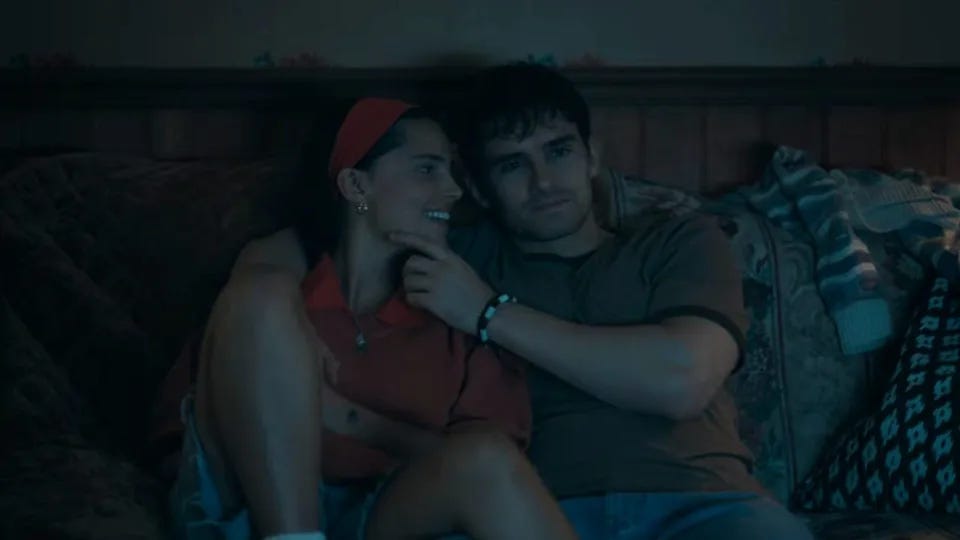
Indie
director and former YouTuber Curry Baker’s film Obsession was an
instant smash hit. With a modest 700,000 dollar budget and an obscene
400,00000 dollars earned, it’s one of the most financially successful
films ever made. As a fan of really intense horror and art that makes me
feel like shit, when something gets this popular I do have the habit of
tending to write it off a little bit. Not assuming that it won’t be
good, but I assumed the horror will be more palatable or sanded down.
There’s a project called Science of Scare that was started in 2020 that
“scientifically” finds the supposed scariest movies. In their most recent list
there’s about five movies that actively scared me. And to be fair, two
of those are Hereditary and Skinamarink, two of the most terrifying
films I’ve ever seen. But the list is also filled with movies like the
middling Sinister and the absolute garbage Insidious series. All this to
say, I don’t engage with horror in art solely for the purpose of
actually getting scared, it’s a nice bonus I don’t get often since I
don’t share the general public’s taste in horror. Obsession really
pleasantly surprised me, though. And by that I mean it made me feel
terrible and I had a great time. This is, yes, due to it’s disturbing
imagery, violent deaths, unnerving score, and the lack of restraint it
has in its willingness go there. This is all great, but the things that have and will continue to make it stick with me
I’m
far from the first person to make this observation, and I won’t be the
last, but I wonder if the explanation for its mega-hit status has to do
with playing both sides of the cishetero binary culture war. By watching
an entitled man get his comeuppance, but also by playing into male
fantasies of intense and excessive female hysteria. By no means does
that mean it plays both sides ideologically, though. The film, in the
short time since its initial release, has gone the way of Fight Club and
American Psycho in becoming litmus tests in basic media literacy and
awareness of male toxicity. Where it differs from those two is giving
you a female presence to be both frightened by and sympathetic to that’s
impossible to ignore. It goes without saying the movie wouldn’t reach
anywhere near the heights that it does without Inde Navarette’s layered
leading performance. But also of great import is the way her character
is written. Yes, she does bad things and she’s terrifying in both very
grounded and very reality-bending ways, but it’s impossible to ignore
how clearly and deeply she’s suffering. Obviously, this goes for the
real Nikki, trapped as a passenger in her own body, wants and needs and
dreams and humanity swallowed by Bear’s selfish desires. But also for
Wish Nikki, saddled with emotions too intense for any human to handle,
forced into existence to deal with them, and not knowing how to cope
with her feelings or be what Bear wanted her to be when he brought her
to life in the first place.
The film avoids the
pitfalls of feeling like “baby’s first feminism” in two really important
ways. One of them is the aforementioned empathetic portrayal of Wish
Nikki. When we aren’t watching her uncanny valley backwards walking
through the gaps between our fingers, she plays like a very mentally ill
woman in all of the really boring normal ways it would in real life.
The horror genre has a checkered past with its portrayal of the mentally
ill, even with how the genre attracts neurodivergent fans and troubled
creatives. And to be fair, it’s hard to make something scary while also
making you feel sorry for it. But Obsession rides that line really well.
As someone with borderline personality disorder, I did see a bit of
myself in Nikki’s manic codependency. Listening to her sob and beg for
approval and love from Bear hit me hard. Watching her cry to Bear that
she felt like he doesn’t love her like she loves him was heartwrenching.
Hearing her desperately scream WHY DON’T YOU LOVE ME!?
resonated with a deep, awful part of me that hates to be seen. I have
to wonder if it’s an intentional nod towards how often cishet men
fantasize about having a mentally ill or disabled girlfriend, only to
turn around and dump them once the fetishized versions of the traits
they believed they wanted dissolve and become ‘too real’. These men want
the idea of codependency, of utter reliance, of obsession, without
any of the real world responsibility and hardship it entails. Seeing
the film through Bear’s eyes makes the bedroom scene even harder to
stomach. When she has this breakdown, deep into the hours of the night,
refusing to sleep for fear the real Nikki will come back and take her
away from her love, we don’t really get to see her as herself. Shadowed
in darkness, her face gets distorted and her voice comes out like it’s
being played through a glitchy speaker. Bear’s view, his male gaze if
you will, only serves to remove more of her humanity.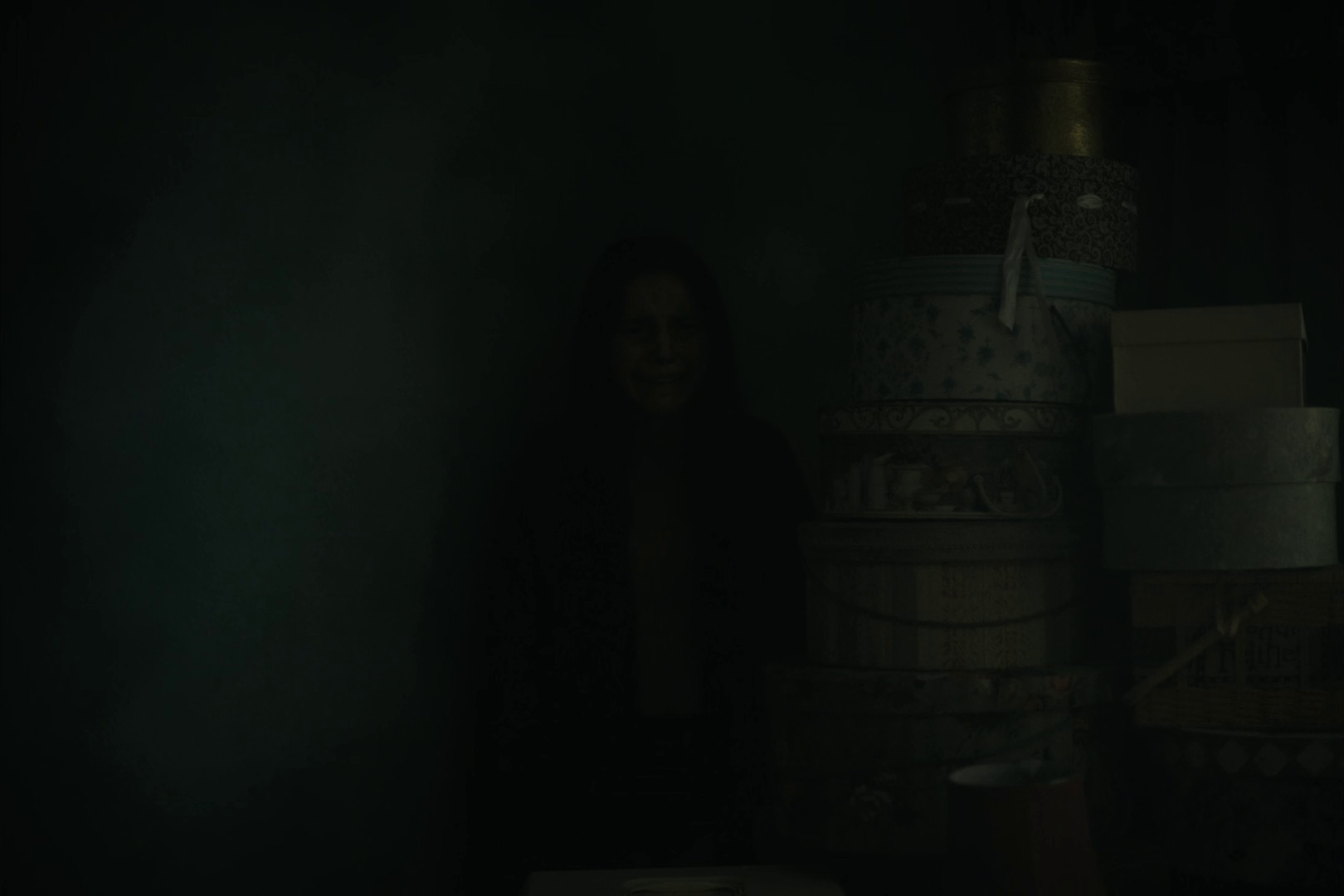
Speaking
of seeing through Bear’s eyes, that brings me to the second important
thing that sets this film apart from a lot of the shallow baby feminist
discourse people still attempt to make it apart of. The kind of shitty
man Bear is the kind that many don’t want to talk about. He’s not the
overtly aggressively misogynist incel, or the angry malnourished gymbro,
or the easy to homophobically stereotype performative male. He doesn’t
fit any stereotypes people have come to default to when talking about
shitty men. This is because Bear is a nothing person. His existence is
apathetic, cowardly passivity. Going through the motions, being
normal-passing and people-facing, but never letting himself be a full,
and vulnerable, person. Bear has three friends he talks to. All three of
them have very little screen time, but in that screen time we find out
at least a little bit about who they are as people. Nikki is a little
messy, but she’s very kind. She works at a music store presumably out of
a general appreciation for art. She’s an aspiring writer who seems to
have a lot of talent from the little bits we see. She’s seeking the
connection she’s missing from her romantic and platonic relationships
both for emotional satisfaction and to improve herself as an artist.
Sarah is an aspiring tattoo artist who’s trying to get off the ground
but can’t since she’s being rejected from every single art school she
applies to. She works for her father’s music store and feels like she’s
leeching off of him and only needs fate to go her way. She’s more
cynical than Nikki, but she’s still shown to be empathetic with her
utter shock and dismay at the news of Bear’s cat’s death and her lack of
attempt to stop Nikki from giving her money to a homeless man. Even
Ian, who reads as a fairly shallow stereotype of a frat bro, still has
details that show the kind of person he is and why others would want to
befriend him. He loves trivia, which tells us he has some amount of
knowledge he likes to flex for others. And he’s a very social person,
his house decorated top to bottom with the perfect setup for a
fun-loving party boy. Alcohol paraphernalia and pinup posters surround
his place, and he has stacks of board games to play with his friends.
He’s also very sociable and funny, which makes him seem like a fun
conversationalist.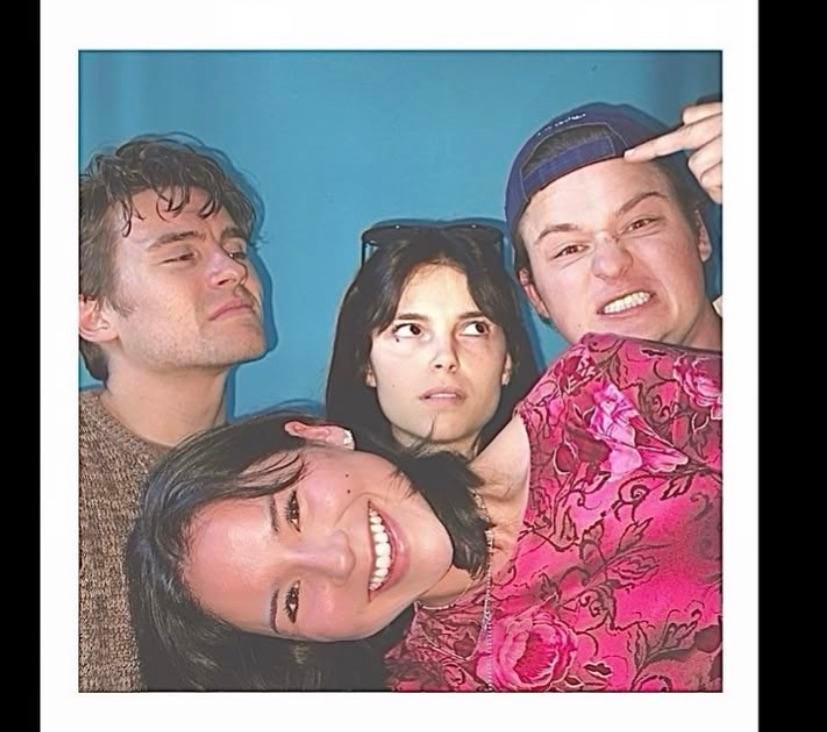
Contrast
this to Bear. His house is inherited from his deceased grandmother and
he’s made no attempts to alter it or fix it to his tastes. His wardrobe
consists of almost cartoonishly similar clothes, to the point that there
was one scene where I thought to myself he’d been wearing the same
sweater for multiple days, only to realize it was simply one that looked
near identical to his previous one. He never speaks about his interests
or aspirations, even to the point of obfuscating his actual goals,
dreams and interests when Wish Nikki asks him in favor of a dumb joke.
He self admittedly is a closed book. The only insight we get is a
blink-and-you-miss-it glimpse at his search history, most of which is
about necessary questions he needs to answer to fulfill his social
obligations, and everything else we’re left with is still pretty nothing
and mostly revolves around his infatuation with Nikki. (Except that he
apparently plays marimba…?????)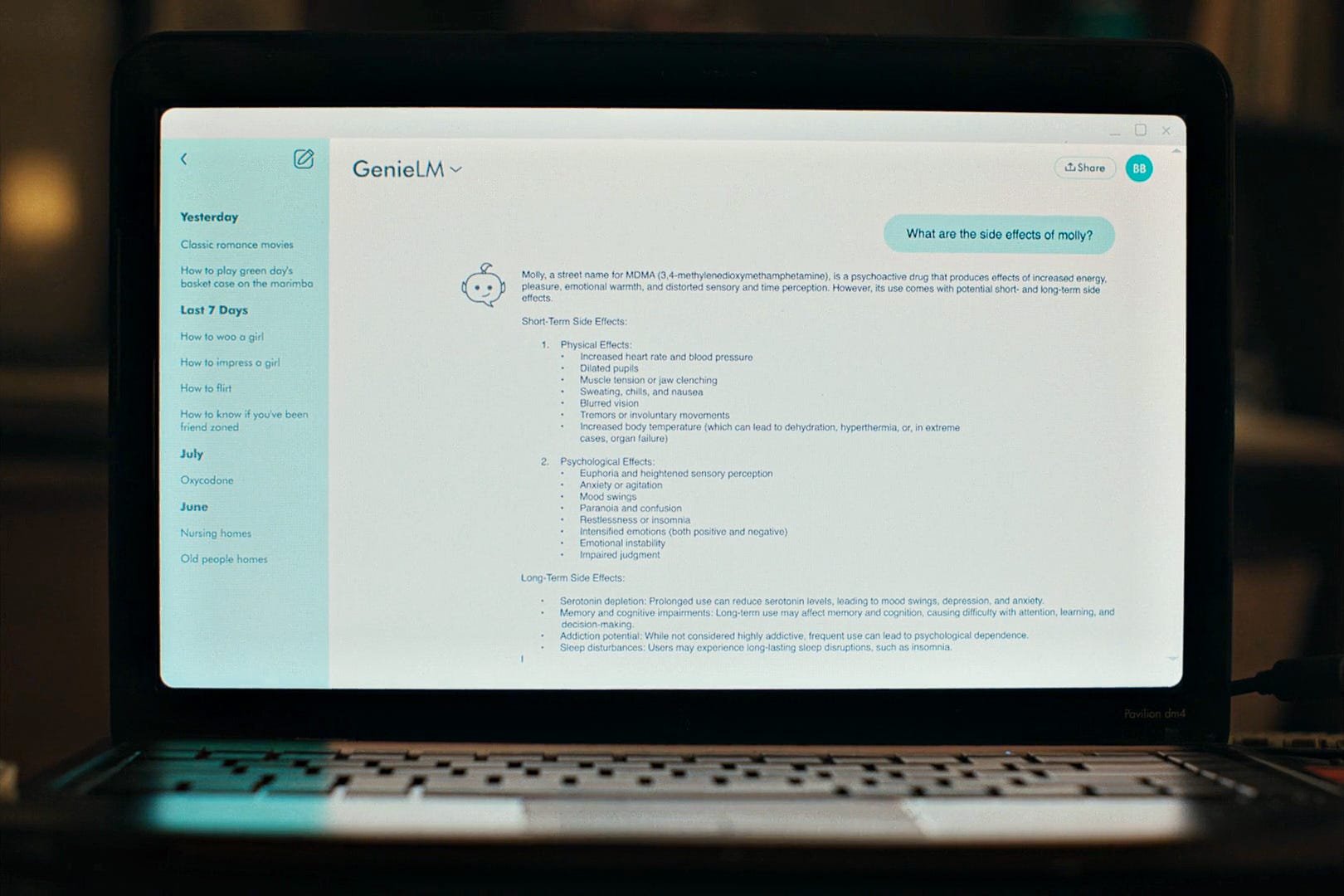
What
I’m saying is that Bear is the kind of guy the discourse is afraid to
acknowledge. He is the sole architect of his own male loneliness
problem. He’s the kind of guy that’s too hard to stereotype for a
shallow ‘feminist’ TikTok skit because he has nothing to stereotype. In
not allowing himself his own personhood and guarding himself emotionally
in the way he does, it’s impossible for him to make the connections he
obviously craves. He wants to be loved but there’s nothing about him to
fall for. There’s nobody to get to know. Nikki says before the wish is
made that he’s the only one she can have vulnerable conversations with,
but that doesn’t seem to be because he’s a strong presence for empathy
and comfort. He’s a good listener, but not out of effort made on his
part. Talking to Bear is like talking to an empty room. It absorbs the
words and it doesn’t offer anything back. The only real input he gives
Nikki in this conversation is not knowing the difference between a
romance and a love story, which goes to show that he’s genuinely never
thought about it before. In a way, he dehumanizes himself, which makes
him unable to see others for their humanity in turn. There’s a couple of
subtle nods to this, with the search history being in a Gemini like AI
chatbot, showing he won’t even put the effort in to fully research
something and think for himself about it. But also in a moment where he
creates a piece of AI generated art for Nikki. No thought or artistic
intent is put into it outside of a simple prompt, just allowing
something else to do the work for him in wooing the girl who’s already
head over heels for him. (This is also a neat nod to real Nikki being a
passionate creative and wish Nikki accepting the slop put in front of
her as long as it comes from Bear)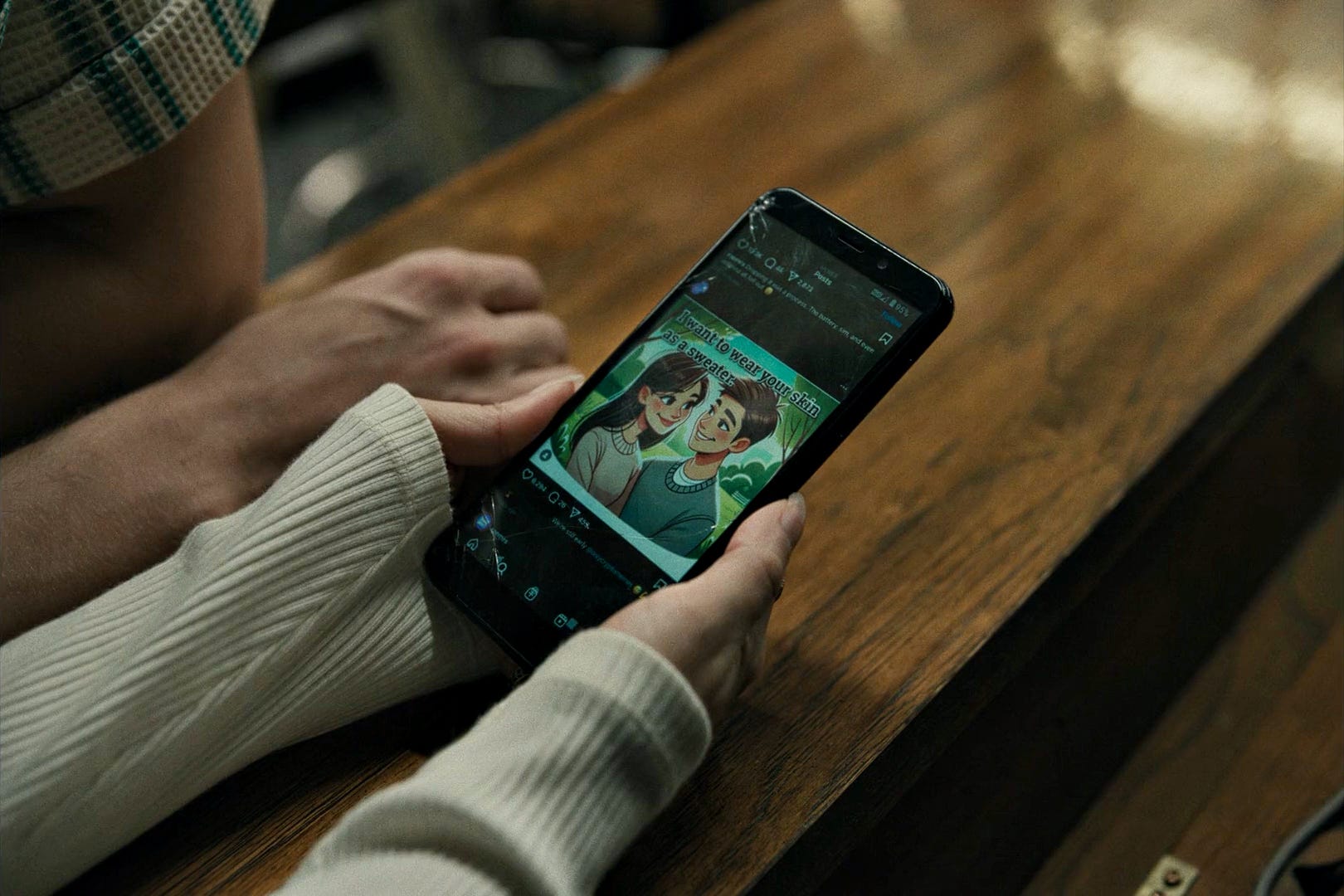
The
loudest voices preaching about the supposed male loneliness epidemic
are just like Bear. Going through the motions of the monotonous routine
of American capitalist existence while never putting in the effort to
form connections or find the things that make life worth living. It
can’t even be framed as a refusal when there’s not any effort being put
into actively rejecting anything in the first place. He doesn’t change
during the course of the film, not improving or devolving. The same
shell of a man he was from frame one. The way he lacks the drive or
desire to humanize himself mirrors the way he dehumanizes
Nikki, and it reflects the real victims of the male loneliness
epidemic: the women that are expected to ‘solve’ this problem.
Nikki
is made into the most literal form of the phrase “object of affection”.
This is literal in a physical sense, where her body is turned into the
avatar for Bear’s fantasies after he makes the wish, an actual
objectification of herself. But it’s also true in the emotional sense.
Bear’s wish is for Nikki to love him “more than anyone else in the
entire fucking world.” This strips her of all of her actually meaningful
connections. Any chance she could have to reconcile or sufficiently cut
ties with her estranged family is gone. Her platonic relationship with
Sarah disappears. Her sexual and possibly romantic connection with Ian
is stolen away. She has no care for the other people around her that
aren’t Bear, a saddening contrast to the kind and bubbly person she was
before. She has no care for animals, given how freely she desecrates the
corpse of Bear’s cat. She’s no longer even allowed to love or care for herself.
The second Bear leaves her side she ceases to move, even when she needs
to take care of herself physically. She simply stands there and waits
for him, to the detriment of her own physical health and safety, and he
comes back to her literally covered in her own piss, shit and vomit.
When the real Nikki briefly takes control at the party and hurts
herself, possibly in an attempt to kill herself, Wish Nikki refuses to admit herself into the hospital and follows Bear home covered in her own blood.
This
literal objectification process is underscored by the horrifically
genius lighting and framing choices. They say eyes are the windows to
the soul, well Nikki’s eyes are hardly ever visible. So much emphasis is
put on her face pre-wish. Her eyes and her smile especially. This is
the image Bear fixates on. The fantasy of the gorgeous girl next door
with eyes only on him. Only for him. But after he makes the wish, there
are numerous shots of her eyes being covered. Either by herself, an
object, the frame of the shot, or most commonly, complete shadow and
pitch black darkness. We don’t get to see all of her little
micro-expressions or the looks she gives Bear most of the time. We only
see her silhouette. She has literally become the shape of a person, and
anything deeper than her conceptual self is hidden in Bear’s shadow.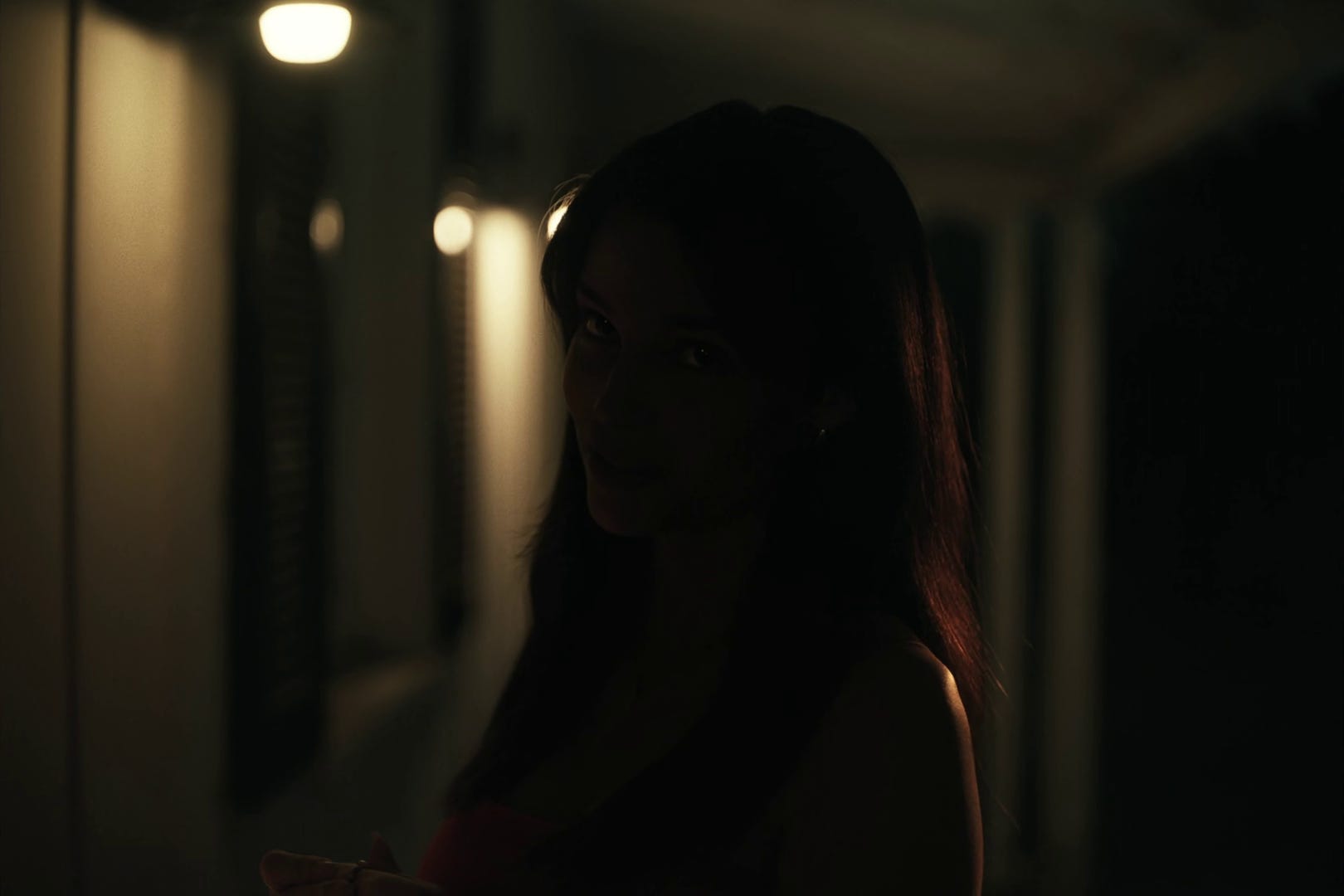
The
most notable time we see her unobscured face after Bear makes the wish,
is in the horrific scene where Bear first rapes her. She makes the
sexy, pleasing noises Bear wants to hear, but he can’t see her face.
There is nothing in her eyes as she looks directly
at the audience, notably in one of the only shots where she looks at
the viewer like this. She doesn’t struggle, she doesn’t silently plead
and ask whatever voyeur or God might be watching to save her from her
own body. She simply stares blankly into endless nothing. Frankly, she
looks dead. And with her humanity, her life, stolen away from her, she
may as well be. Barker
has gone to great lengths in interviews and post-mortem discussions of
his own work to clarify that the One Wish Willow’s only supernatural
trait is granting wishes. Which means Nikki is not possessed,
there’s no secondary entity controlling her body. She’s trapped inside
herself, puppeted by the wants of someone else who only seeks to use
her. Nikki is a living dead girl.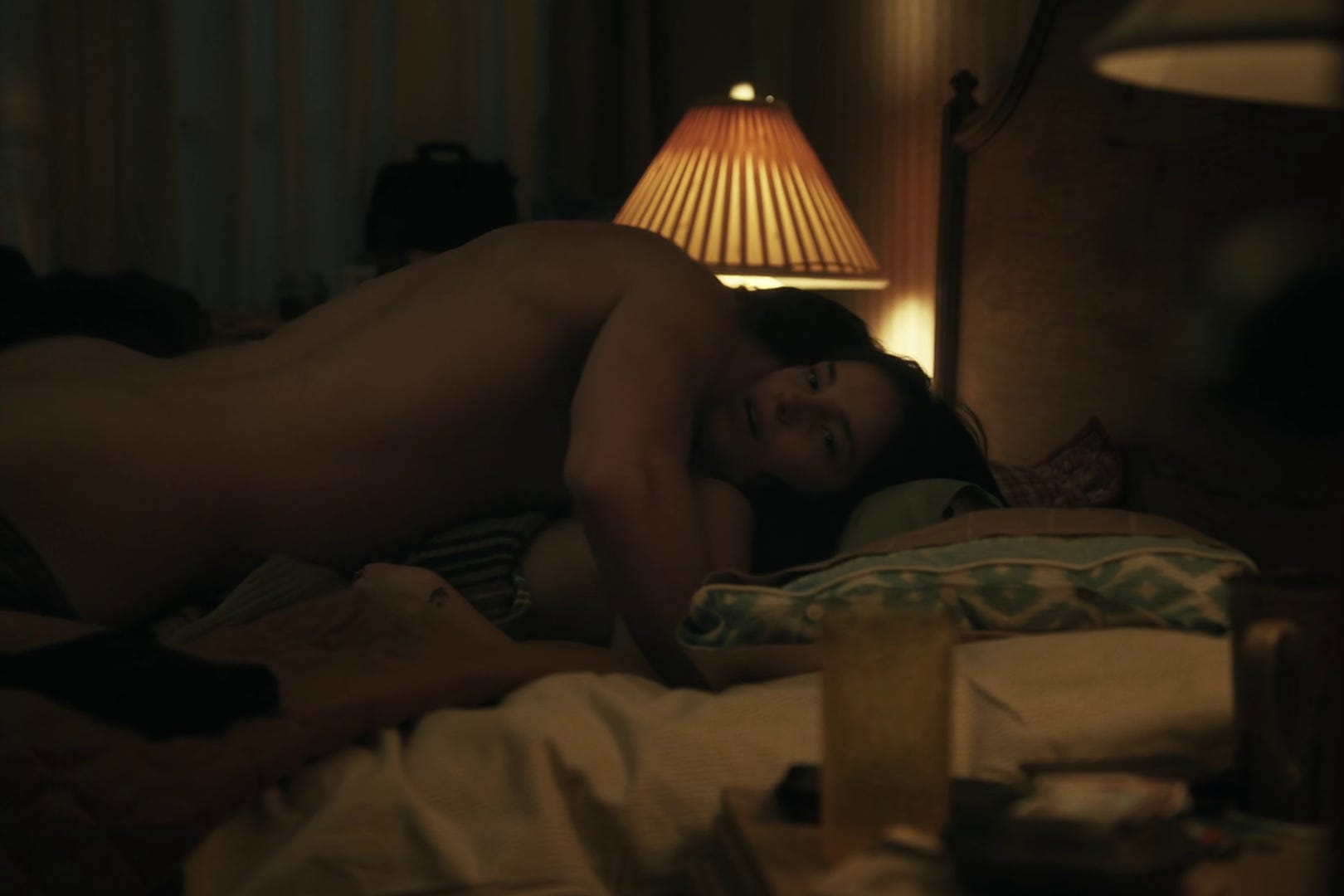
Lastly,
I want to talk about their relationship dynamic as a pair, somehow a
slightly underdiscussed aspect of the movie in my experience. Stick with
me here, I know how this is gonna sound. Especially coming from a
self-proclaimed sex positive pervert who often indulges in the taboo
side of erotic fiction. …Why is no one talking about the incestuous
undertones of Bear and Nikki’s relationship?
There’s
one really obvious example that your mind likely jumped to after
reading that. One of the most important pieces of dialogue is the
previously mentioned romance vs love story exchange. Well, later, we get
some insight into what Nikki was writing. It seemed to be a Hansel and
Gretel retelling. Likely, the love story she was referring to was not a
romantic story, but a story of familial love. Not only does this tie in
with the undertones of her being alienated from her typical nuclear
family relationships, considering she says she needs to find love to
write it, but it also ties in with something she previously told Sarah.
She sees Bear like a brother. When the wish takes over Nikki, she writes
more of her story and reads it out loud in an infamous scene. The
previously familial love story Nikki was writing is perverted by Bear’s
desire. To quote it: “You’re not my wife, Gretel.” “I’m more than your
wife… I’m your sister.” The wording here is interesting. Other than this
scene bringing up the perversion of the familial dynamic Nikki had with
Bear, it also says something interesting about Bear through Wish
Nikki’s reflection of his desires. Commonly, romantic love is framed as above
familial and platonic love. “We’re more than family.” “I don’t see you
as just a friend.” etc. But the Hansel and Gretel portrays the familial
above the romantic. “I’m more than your wife.” There’s a lot of debate
about if Nikki was interested in Bear before the wish, and it was made
intentionally ambiguous. To me, though, this scene proves she wasn’t.
Besides seeking to further other Wish Nikki from societal normalcy, it
also underscores Bear’s preoccupation with Nikki’s view of him and the
concept of the friendzone. She doesn’t see him as a potential romantic
partner, she sees him as a platonic and familial presence in her life.
He doesn’t seek to change her view of him, he wants her to put that
above romance. Remember, more than anyone else in the world means above
all others, including friends and family.
Outside
that obvious example, I think their dynamic reads very similarly to
parent and child a lot of the time. (Or maybe owner and pet.)
Wish
Nikki acts very childish. Pouting, throwing tantrums, stomping and
whining when she doesn’t get her way. She also has a hard time with
really basic concepts and words. Her constant parading around of Bear’s
dead cat reads a lot less malicious if a child with a loose
understanding of right and wrong is doing it. When she creates the
shrine for her in the kitchen, Bear tells her it’s fucked up. She asks
if that’s bad, seemingly very genuinely confused and grasping for
knowledge. It brings to mind the wording of Bear’s wish, “more than
anyone in the entire fucking world.” Does Wish Nikki comprehend this
particular word only in positive contexts? Does she need to learn the
negative connotations it has in average, adult conversation? In the
Hansel and Gretel story, mention is made of an old woman who “taught
Hansel and Gretel to lie together.” This calls to mind imagery of child
sexual abuse as well as incest, which is especially distressing in the
context of Wish Nikki being childish and placed into a warped familial
role. But it also reinforces the idea of adults teaching her things, and
teaching them wrong in a way that harms her and eventually others.
In
the script, a lot of Nikki’s dialogue and stage directions are tagged
with ‘childlike’ or ‘childish’, and many of her actions and mannerisms
are described similarly. A quick Ctrl+F search of the script shows 10
uses of the word child or with child in them, and all but one is
ascribed to Nikki, and the first is one of the very first moments after
the wish is made. The moment she turns into the object of affection, she
becomes a child. A lot of misogynistic cishet men describe their ideal
partners similarly to a family member or a child. A mother who will fuck
you. A pure virgin you can trick into your bed. A sister you can marry.
Wish Nikki reads like the logical extreme of this phenomenon. She
literally acts like an unruly child, and Bear has to parent her like
one. Tell her right from wrong, calm her down when she has a tantrum,
clean up after her messes, tell her what to do. Another example of his
fetishistic fantasies disappointing him when he understands the reality
of them. Notably, also in the original script, Wish Nikki initiates
makeup sex after the party. How does she do this? By telling Bear to
“rail my guts like Hansel fucks his sister.”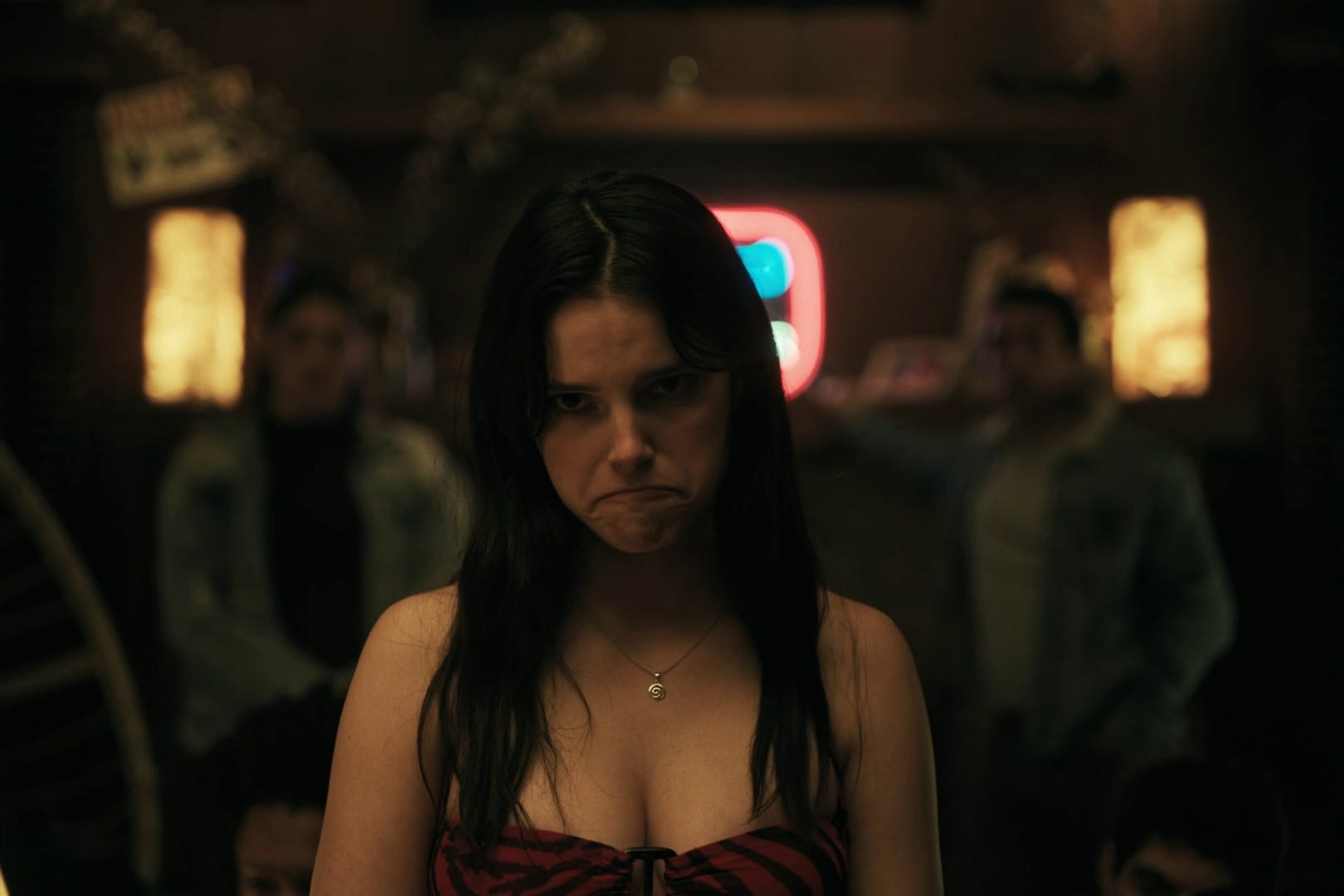
Bear,
much like adults who abuse children, refuses take responsibility for
his actions. It’s his worst trait and the thing that eventually gets him
and all his friends killed. But in the context of reading their dynamic
as the logical extreme of paternalistic cishetero patriarchal sexual
norms, it becomes even more distressing. Everybody has their moment that
killed any chance of Bear becoming a redeemable or likeable character
for them, mind came early. When real Nikki briefly snaps back to reality
and pushes herself off of Bear, he freaks out and says “you made me feel
like I did something you didn’t like.” Never once does he ask if she’s
alright, he’s worried about himself and his own reputation. I phrased it
to a friend I mentioned it to like he’s building up a preemptive court
case, but thinking on it more I believe a better description is that
he’s trying to get out ahead of a Me Too story. This, once again, feels
more similar with the parent-child coding and the uneven power dynamic
at play. His inability, or refusal, to take accountability for his
actions also echoes a neglectful parent. He’s told directly multiple
times what he has to do to save Nikki, but it figuratively and literally
fades into the background. He has someone he says is important to him,
someone he says he loves, someone he forced into existence. But when
it’s time to man up and make the necessary sacrifices for her
well-being, he ignores the possibility entirely.
The
dichotomy between the real Nikki and Wish Nikki also becomes even more
tragic with this reading in mind. It’s easy for a child to feel trapped
within their own body and the role they’re forced to adhere to by
parents and by society, unable to claim any of their own agency over
what happens to them or who they’re allowed to be. And adult women are
treated like children, especially by abusive partners, and it’s so
normalized most don’t even give it a second thought.
All
of this stolen agency and lack of control over the wants of others
dictating her life comes to a head in one of the most tragic horror
endings, and endings period, that I’ve ever seen.
Bear’s death, which he’s only forced away from chickening out of by having his
agency over his body stolen by Nikki’s wish, snaps Nikki back to her
body. Now, surrounded by death ‘she’s’ responsible for, finally not a
passenger in her own body, she will be forced to take the responsibility
Bear refused to. Once again, and for the final time, the victim of the
whims of one selfish man. Forced to pay for the crime of kindness
towards the wrong person. 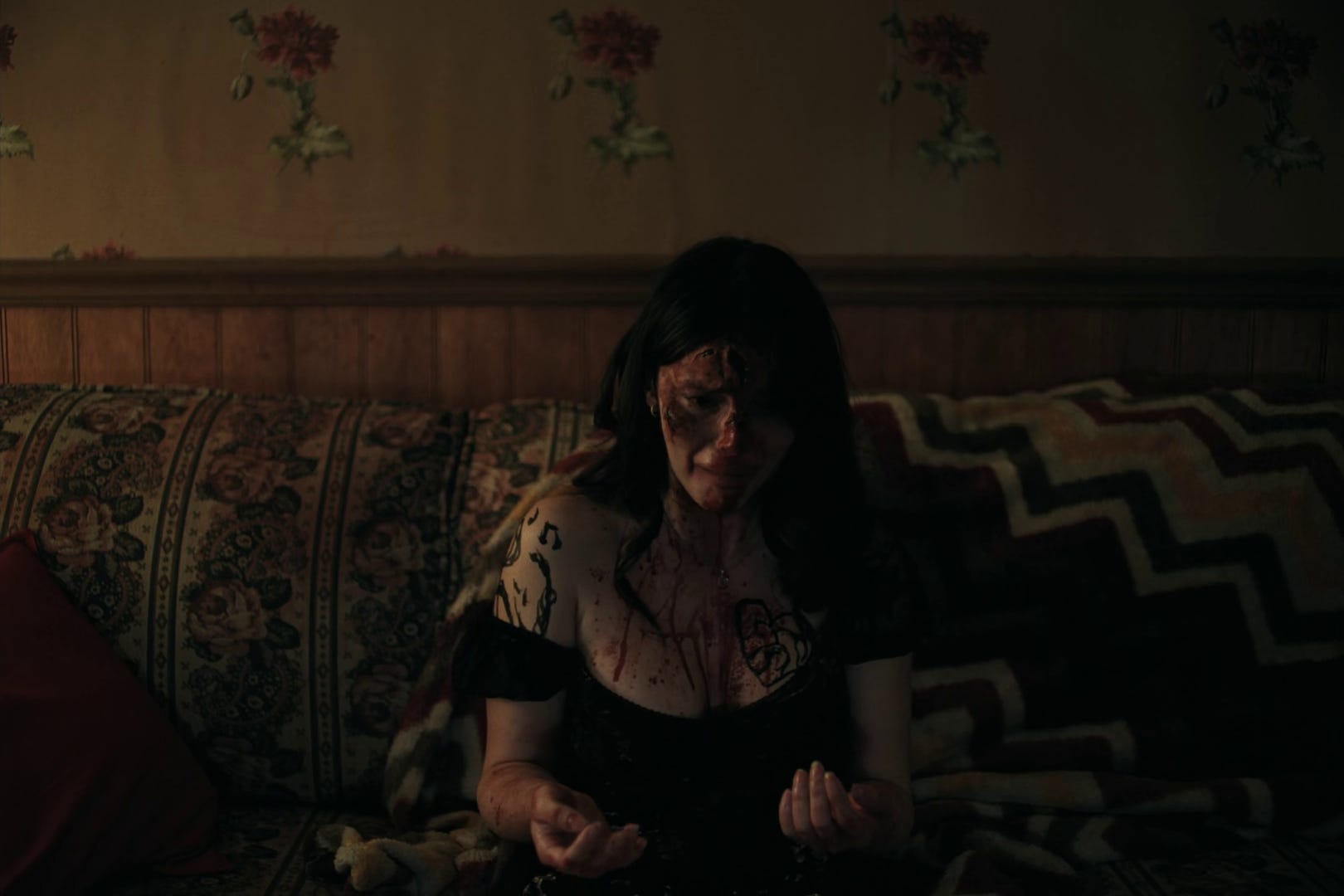
There’s
a lot more I could talk about in Obsession. The way that the wish
directly pits against a positive female presence in her life, mirroring
the ways women often see each other as competition for male affection.
The fact that the One Wish Willow is notably not a monkey’s paw, and the
problem is Bear’s entitlement and selfishness. The disgusting,
depressing, and terrifying exchange when the real Nikki is finally lucid
enough to beg for Bear to kill her, and he leaves her alone, feeling
petty and offended that she doesn’t want to be controlled anymore. The
way that the film exists in the uncanny valley, in an odd secondary
reality that feels familiar but just wrong enough to unsettle you. I
could even go more in depth with how genius the filmmaking techniques
are, and the use of non-diagetic sound and visuals to create terror that
only exists for the audience and not the characters. But I think I’ll
leave it here, with a final thought…
Yo this shit gave me crazy nightmares man fuck this movie.
Comments
Displaying 0 of 0 comments ( View all | Add Comment )